

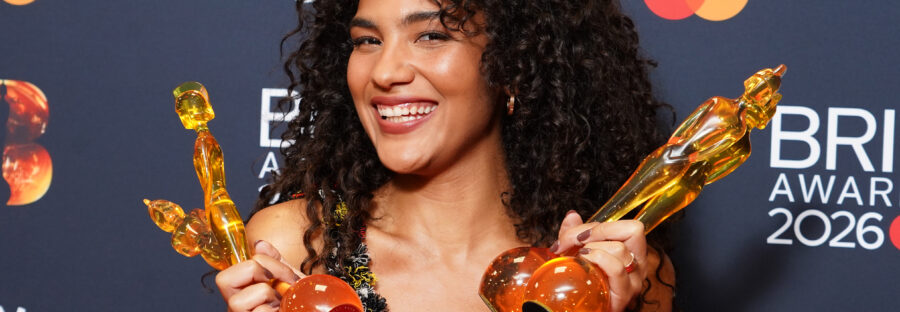
The BRITs 2026 – a fresh set of eyes on tradition
- Words by Billy Narayn-Nicholas
- Featured image: Ian West/PA Wire
The excitement across Manchester has been palpable since it was announced that the BRIT Awards were heading north.
Art trails, reimagined Metrolink stations and fringe events stretched across the city in the weeks leading up to the ceremony. For once, the build-up felt bigger than the guest list.
The city welcomed the usually London-centric institution with warmth and expectation. For decades, the BRITs have celebrated a familiar pipeline of British success. Polished. Export-ready. Immaculate. The move out of the capital felt like an opportunity to disrupt that pattern.
Relocating the ceremony could have marked more than a change of venue. It had the potential to shift the cultural centre of gravity and reinvent the BRITs to feel fresh and genuinely innovative, becoming a ceremony that reflected what sits at the heart of British music rather than simply rewarding their own safest success stories.
Staging was good. Sound was tight. With the people of Manchester awaiting the world’s biggest and best musical talents to burst into the city with the move to Manchester’s Co-op Live. Now the largest indoor arena in the UK, this BRITs became the most attended ceremony in its history. On paper, it was a symbolic shift north. A recalibration, if you allow me to indulge.
And for a moment, it actually felt like that was the case.
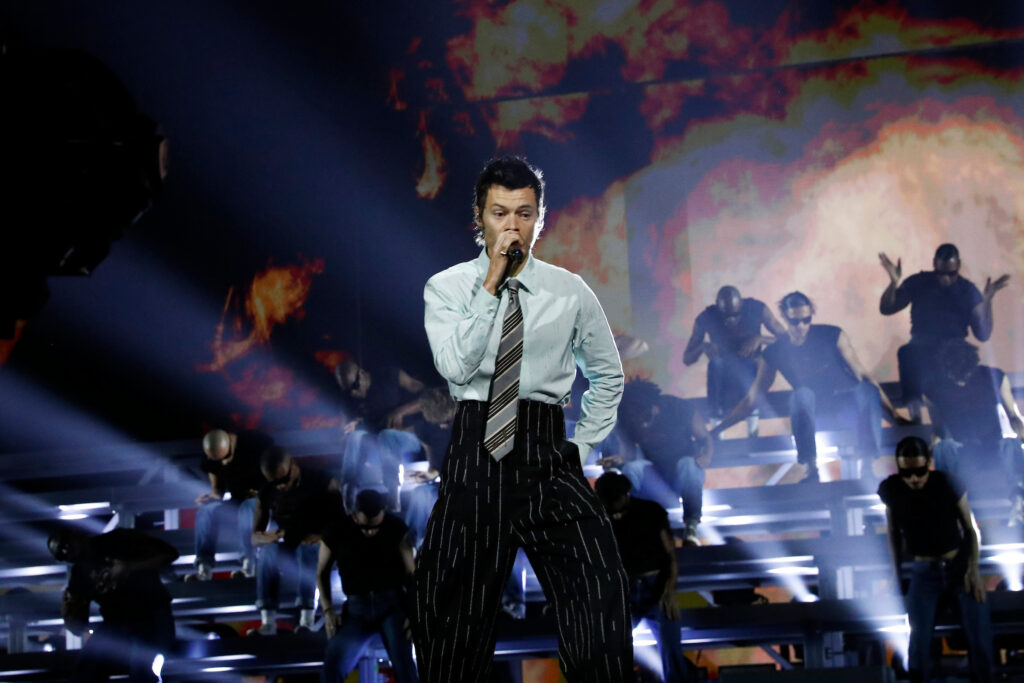
Harry Styles was a strong opening to the night with his new single, “Aperture”. A clever tonal move. Styles, Cheshire-born yet forever orbiting that soft northern charm, felt like the absolute bridge between global pop heavyweight and regional grounding.
“Aperture” itself was misunderstood by some of his long-term fans on release and interestingly labelled techno, but it unequivocally made sense as the opener. It sits somewhere between synthetic jersey club textures and the kind of LCD Soundsystem-adjacent cool that has crept into the mainstream over the past few years. The performance was tight, with the dancers almost intrinsically sharp. Even Styles’ own movement, once cautious, felt committed. The performance signalled an evolution from what Styles was before his hiatus into a new era, pushing boundaries that for many may be more of an acquired taste than expected, but nevertheless particularly forward-thinking.
Where Styles’ opener embraced reinvention, the choice of host complicated that narrative.
Jack Whitehall’s monologues were characteristically hit and miss. Sharp in places, but repeatedly drifting into gags at the expense of some of Manchester’s most disadvantaged areas that felt less affectionate than perhaps intended. What might have been playful local banter instead carried an undercurrent of the very north-south divide the ceremony was attempting to dissolve.
That instinct toward familiarity did not end with the hosting.
Lola Young’s win in the Breakthrough Artist category reignited a familiar conversation that seems to surround Young throughout her career. Not about talent, but about access, timing and nepotism.
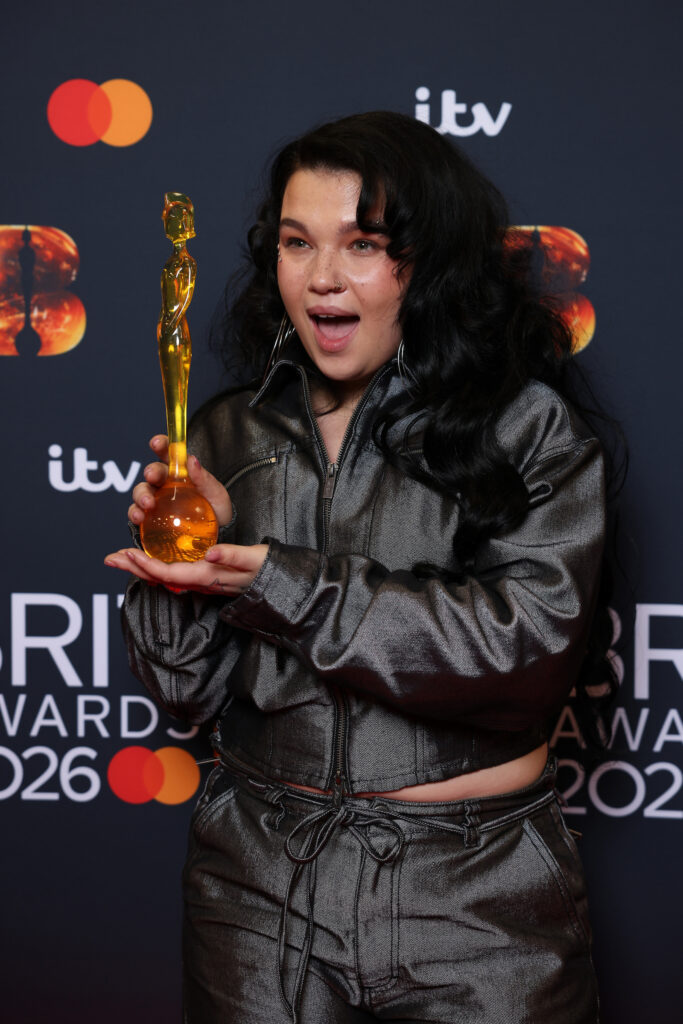
British music in 2026 is broader than ever. The other nominees, particularly Skye Newman, Jim Legxacy and EsDeeKid, have built movements in specific corners of the scene, cultivating audiences beyond traditional industry pathways.
Skye Newman only began releasing music in 2025, met with immediate critical acclaim and selling out a UK and Ireland tour within minutes. Jim Legxacy’s Black British Music was a genre-defying statement, written, produced and performed entirely by him, while also contributing to Dave’s The Boy Who Played the Harp. And then there is EsDeeKid. An artist who took the Scouse accent global, with one of the fastest growth trajectories in the history of digital streaming, taking the Uk’s gritty underground to a place that surpassed all expectations, oh and collaborated with Timothée Chalamet in case you forgot.
Two debut performers on the night were America’s current it boys, Alex Warren and Sombr, both delivering polished, confident sets. Warren’s rendition of “Ordinary”, accompanied by James Blunt and the Halle Orchestra, was cinematic and expansive, contrasting with Sombr’s alt-leaning performance that carried genuine momentum, especially with his light-hearted attempt at guerrilla marketing in the transition between songs.
But their inclusion shapes the question: why not prioritise that stage time for the British Breakthrough nominees themselves? Especially when compared to the Grammys platforming all Best New Artist nominees with performances. The BRITs could have mirrored that model, giving emerging names equal footing on one of the biggest stages in the country, they all have the talent, the scope. Instead, the sense persists that proximity still matters.
This is not a criticism of Young herself. She is deserving. But this pattern of BRIT School alumni dominating key categories is difficult to ignore. Even in a year framed as a departure from tradition, the BRITs leaned toward familiarity in both tone and trajectory.
Reinvention, it seems, is easier to stage than to systemically commit to. And yet, when the system works at its best, it works brilliantly. There was one BRIT School alumna whose inevitability was destined throughout the night: Olivia Dean.
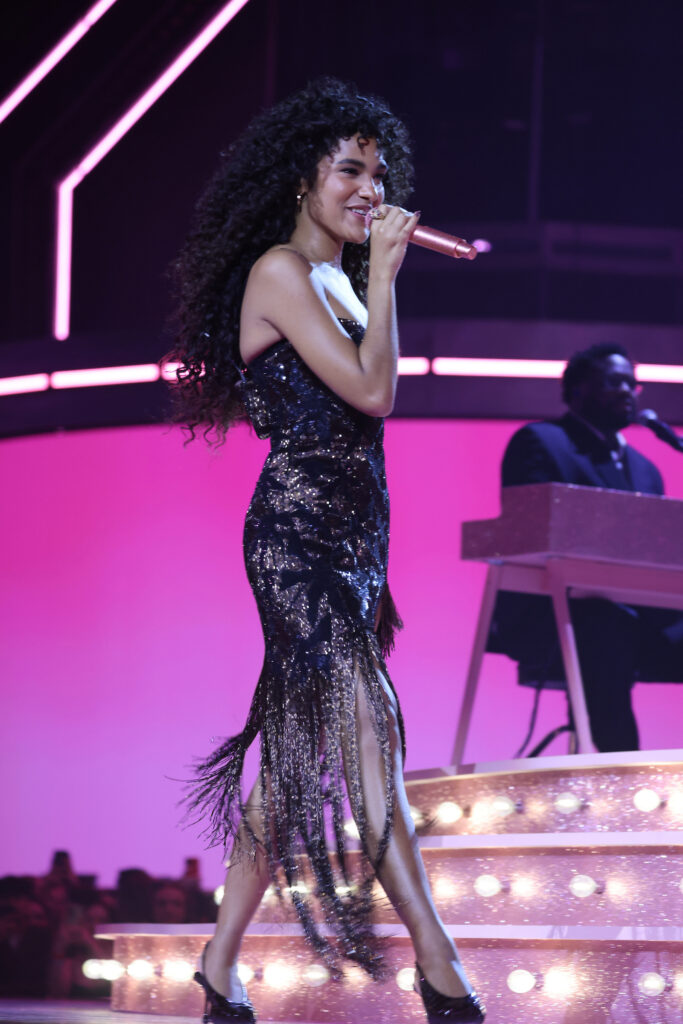
Much like Charli XCX last year, Olivia Dean defined the night, winning Artist of the Year, Album of the Year, Pop Act and was featured on Song of the Year. Her sweep felt less surprising and more of an inevitability. Performing “Man I Need” with her classic warmth and charm, she balanced polish with sincerity. Each time her name was called, her family’s cheers rang out from the stands. It was difficult not to feel moved by her humility. Dean deserved her dominance. In the same breath, Raye, another BRIT School graduate, reinforced that same sense of refinement in her performance, reminding the room that the pipeline does not only produce safe winners. At its best, it produces artists capable of commanding both the sense of intimacy and scale.
The night was not completely dominated by names synonymous with the BRIT School pipeline, and if the move north was meant to signal something deeper, there were flashes where that intention felt real. DJ Paulette presenting Best Electronic/Dance Song carried personal significance, With Paulette being a Manchester staple and MMU alumna, her standing on that stage felt aligned with the city’s actual cultural fabric.
There were twinkles of Manchester’s musical lineage throughout the show. The In Memoriam segment saw Tim Burgess of The Charlatans speak on the loss of Mani, grounding the evening in the city’s own musical history. Wolf Alice were presented with Group of the Year by Shaun Ryder and Bez, a pairing that are distinctively Manchester in spirit.
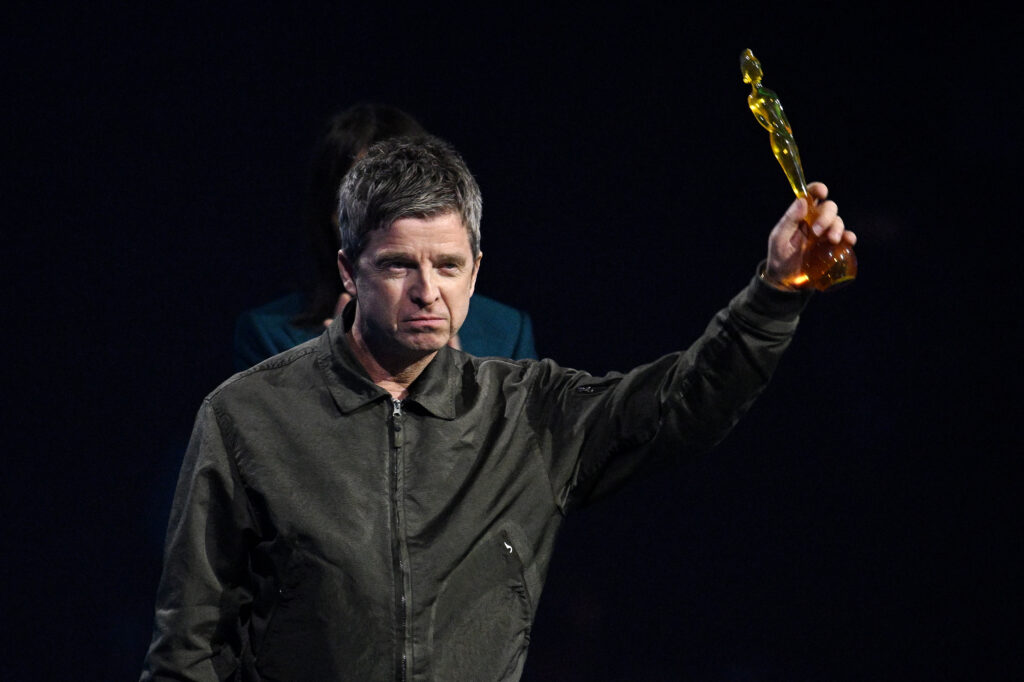
Noel Gallagher receiving Songwriter of the Year, presented by Bobby Gillespie of Primal Scream, served as a reminder that the city’s influence on British songwriting has stretched across decades and how Oasis will always shape the present. It was a reminder that the BRITs at their best can widen the frame rather than simply relocate it.
Sam Fender’s two awards felt especially significant, particularly Song of the Year for “Rein Me In” featuring Olivia Dean. A songwriter whose identity is inseparable from South Shields, his success sits outside the traditional blueprint. Fender has always felt purposely anchored to the north-east rather than institutionally groomed. His recognition suggested that scale and sincerity can still cut through without BRIT School polish being the primary currency.
Newcastle’s golden boy was not alone in representing something slightly less predictable. Geese’s win for International Group of the Year offered a necessary disruption. When drummer Max Bassin appeared alone and delivered blunt, unscripted references to Palestine and ICE, the arena erupted into cheers.
Compared to previous years, Stormzy’s 2018 performance and Dave’s powerful 2020 spectacle, this ceremony felt noticeably less political. Bassin’s speech was as close as the night came to that edge. In a year where the world feels louder and more divided than ever, that strain of resistance at the BRITs felt thinner in Manchester.
The second half of the show was unexpectedly packed.
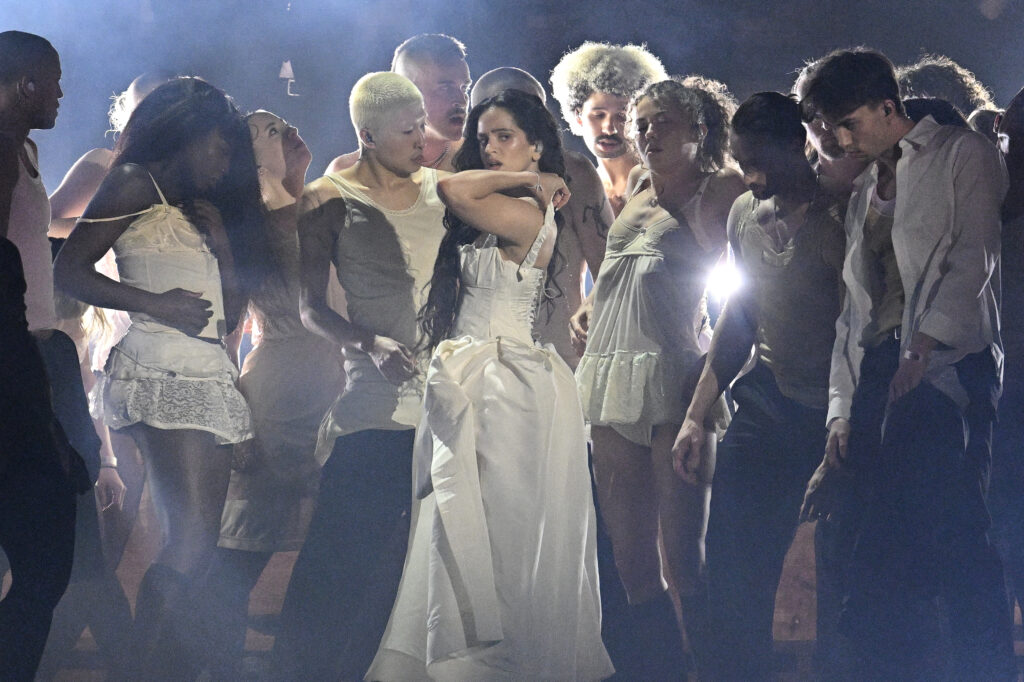
Rosalía delivered what can only be described as a career-defining performance with a genre-bending rendition of “Berghain”. What began as something almost operatic, restrained and theatrical, slowly unravelled into something far less predictable. From behind a wall of dancers, Björk emerged, spectral and commanding, with Rosalía instinctively allowing her the space to exist entirely on her own terms. Given how rarely Björk appears in settings like this, the moment was seismic. As she retreated back into shadow, the stage flooded with movement. A gabber bassline detonated through the arena, transforming opera into full-scale techno elation. Rosalía did not simply perform, she committed, hitting the hakken whilst blurring every line into a cult-classic performance. Chaotic in the best way.
There was something reminiscent of Kanye West’s 2015 BRITs performance in its refusal to dilute itself for the broadcast and was a moment that felt bigger than the room trying to contain it. Rosalía went on to be awarded International Artist of the Year, beating acts like Sabrina Carpenter and the mighty force of Taylor Swift.
Where Rosalía embodied reinvention, Mark Ronson represented legacy.
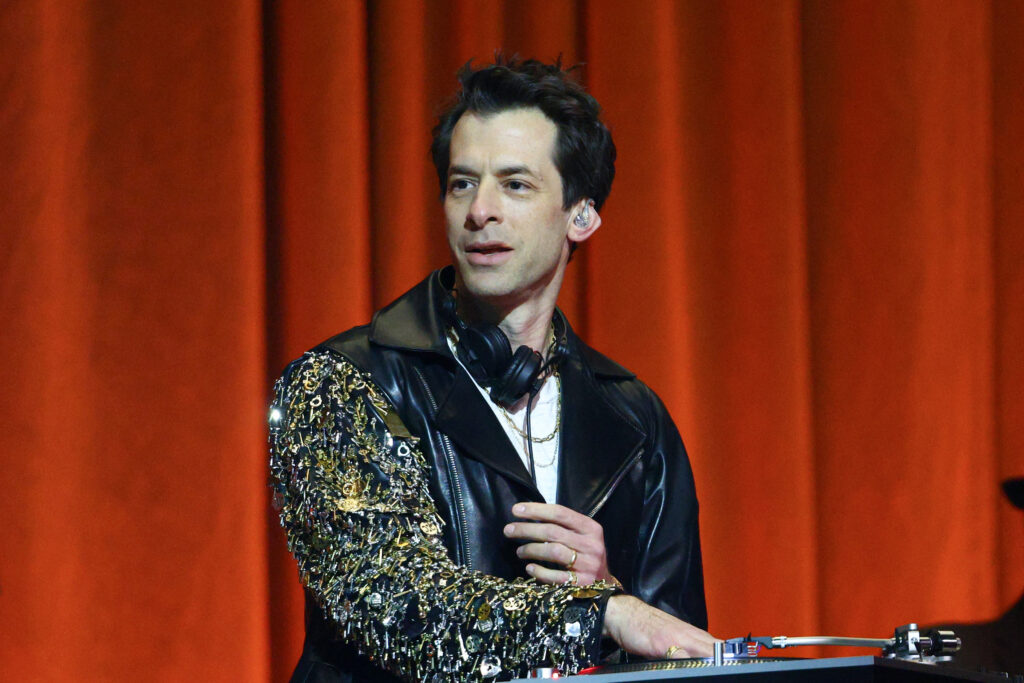
It is long past time that Mark Ronson should have received his flowers. Few figures have been as instrumental to the global music scene over the past two decades, yet his omnipresence has almost worked against him. When you are that synonymous with the sound of modern music, it becomes easy to overlook the architect behind it. From producing Amy Winehouse’s “Back to Black” into a generational touchstone to helping engineer Dua Lipa’s disco resurgence, Ronson has not simply participated in music history. He has steered it. Being awarded Outstanding Contribution to Music felt less ceremonial and more corrective, with The performance itself being a sharp reminder of that catalogue.
He honoured Amy Winehouse with “Back to Black” and “Valerie”, joined by members of her original band, as well as bringing out Ghostface Killah in a nod to his New York hip-hop foundations. Then came Dua Lipa, descending atop a glittering disco ball in a moment of pure spectacle. The band was immaculate. The transitions seamless. A tightly constructed mash-up of his biggest records unfolded with the confidence of someone who knows the weight of their own archive. Ronson is not simply part of the scene. In many ways, he built the scaffolding for it.
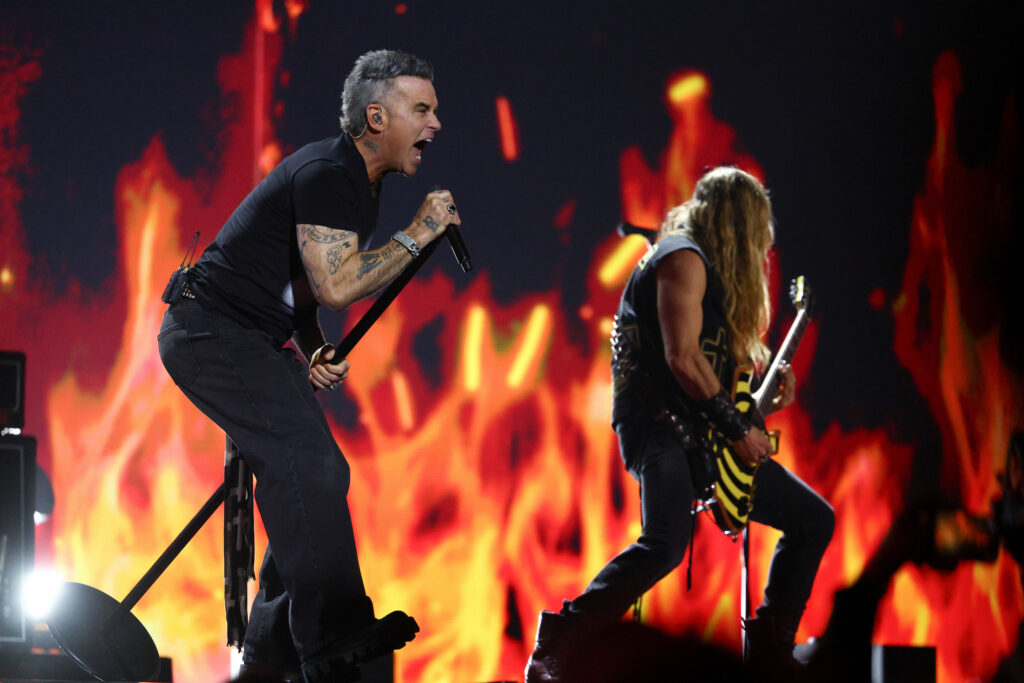
The Ozzy Osbourne lifetime achievement award, followed by a tribute performance, was always going to be a tricky one to get right, but it may have leaned a little too safe. Robbie Williams felt like an odd choice. Solid, experienced, known. But almost too polished for Ozzy, whose whole career was built on chaos and being the image of punk rock. It was hard not to picture Yungblud in that spot instead. He is at his best when it comes to Ozzy, and you only have to look at his live performances of “Changes” at Ozzy Osbourne’s final show to see how much it clearly means to him. Especially given how close he became to Ozzy in his later years, it might have brought a bit more edge to the moment.
There were, however, choices that felt harder to ignore. While it was a significant night for a mixed-race women, who dominated the major categories, several Black-led genres, including Rap Album, R&B and Dance/Electronic, were awarded during the ad breaks, with winners acknowledged only briefly on return. On a night positioned as expansive and forward-facing, that programming felt questionable.
There is a clear renaissance happening in British music. Artists like Olivia Dean are technically exceptional yet publicly grounded, aware of their platforms and grateful without feeling manufactured.
This was a strong year for British music, and it showed. The performances were ambitious. The arena was full. Manchester proved it could hold the weight of the BRITs without hesitation. The question now is whether the BRITs evolve quickly enough to truly reflect that shift, or whether next year’s return up north risks feeling like Manchester is being treated as a cultural outreach project rather than what it is, and has long been, a pinnacle of British music culture.