

More Than THC: The Spiked Vapes Putting Young Users at Risk
Manchester is facing renewed concern over the spread of synthetic cannabinoids, commonly known as spice, amid warnings that the drug is increasingly being consumed through vapes marketed as cannabis or nicotine products.
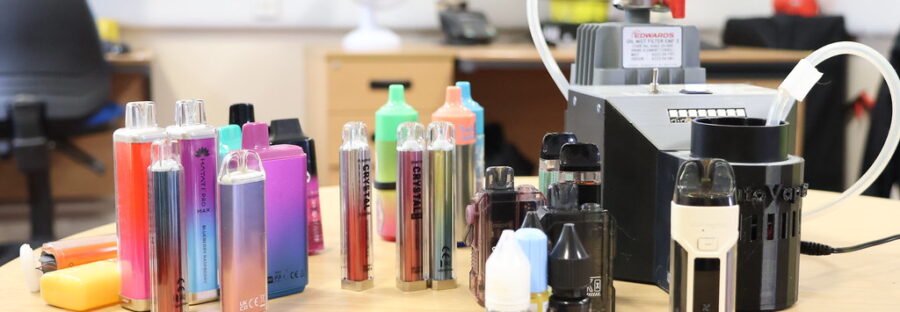
Recent national research conducted by the University of Bath, University College London, the University of Glasgow, MANchester Drug Analysis & Knowledge Exchange (MANDRAKE), Manchester Metropolitan University, Teesside University, the Daniel Spargo-Mabbs Foundation, and the University of Bristol. Found that a significant proportion of vapes confiscated in schools contain spice rather than the substances they claim to hold.
This is a trend that harm-reduction workers say mirrors what they are seeing on the streets of Manchester, where spice use has long been linked to homelessness, hospitalisations and sudden collapses in public spaces.
For Claudia, a woman from Portsmouth now in recovery, the danger of these products became clear only after what she described as a life-threatening addiction. She said she was sold vape liquid labelled as THC, complete with cannabis imagery, but later discovered it contained spice.
“The physical withdrawals went on for about 10 days, and then after that it was mental withdrawals for about six weeks,” she said. “That was the worst experience I have ever gone through in my life, physically.”
Claudia said the effects of the drug were unpredictable and severe. While working at events, she collapsed during a shift at London’s O2 Arena after using the vape. “I went into a disabled toilet and passed out for about 20 minutes,” she said. “If I’d hit my head, anything could have happened.”
She said the appeal of the drug was initially disguised by its presentation. “It was being sold to me as liquid THC — it had a weed leaf on the label.”
Claudia said accessing help was difficult at the height of her addiction. “My GP and the NHS didn’t want to help me,” she said. “The only thing that would have helped was a charity, but I needed to be clean for five or six days before they would intervene.”
She credits her recovery to her mother, a former nurse, who intervened when Claudia’s condition rapidly worsened. “I couldn’t stand up, my speech was slurred,” she said. “My mum was terrified I didn’t have five or six days left.”
Claudia also raised concerns about regulation in the vape industry, describing how easily the substance was available. “While I was in recovery, I went into a vape shop to buy nicotine liquid and this was offered to me again,” she said. “If that’s happening in Portsmouth, it’s happening everywhere.”
She warned that unlike opioids, spice overdoses are particularly dangerous because emergency services often do not know what substance has been taken. “There’s no antidote for legal highs,” she said. “No one knows what’s in them except the manufacturers.”
After sharing her experience on social media, Claudia said between 150 and 200 people — many aged 16 to 18 — contacted her with similar stories, reinforcing fears that spice-laced vapes are contributing to a growing public health issue that cities like Manchester are already struggling to contain.
Authors of the research study are calling for stricter enforcement for the Online Safety Act, as many young customers were found to have purchased the vapes from social media.
For more information on the issue:
https://assets.publishing.service.gov.uk/media/5a79849d40f0b63d72fc679a/legal-highs-postcard.pdf
For help if you are struggling with similar issues:
https://www.changegrowlive.org/service/manchester-drug-alcohol