

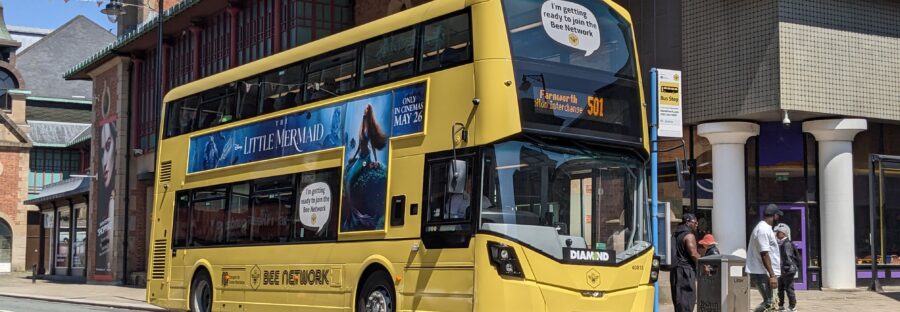
Transport for Greater Manchester launches new fully electric bus route
Featured image credit: Wikimedia Commons
A new fully electric bus route has launched in Manchester, a showcase of yet another step to reduce the city’s emissions.
The fully electric service, the route 30, which goes from Piccadilly Gardens to the Trafford Centre, began operating earlier this month. This new service replaced the old x50 route and forms part of TfGM’s long term plan to transition Manchester’s public transport away from diesel powered vehicles.
It is one of several electric bus routes within the city, joining other routes in the journey to make the Bee Network more green.
Environmental activist Grace Nicholls, who has been involved with Just Stop Oil, welcomed the move. She described electric buses as an obvious and overdue option for public transport.
”There’s no need for buses to be diesel anymore,” she said. ”They’re not going to get stranded or not have a place to charge, so why wouldn’t they be electric?
”If a new bus route reduces the amount of people using cars it’s a plus. It’s still reducing emissions loads, electric or not, but obviously it being electric just makes it even more environmentally sound.”
The launch comes as Greater Manchester continues to expand and update the Bee Network, which has seen bus services brought back under public control for the first time in decades. Supporters say the change has allowed routes to be planned around community need rather than profit, while also accelerating the shift towards greener transport.
TfGM says the new electric route will help residents access jobs, education and services more easily, particularly in areas previously not accessed by public transport.
Fran Wilkinson, head of customer and growth at Transport for Greater Manchester, said the launch reflects the region’s commitment to improving connectivity while supporting economic growth.
“By bringing buses under local control we have put services back in the hands of our communities that make a real difference,” she said.
Wilkinson added that the start of the new route signals continued momentum for the Bee Network in 2026.
“It’s great to start the New Year off with another new service to better connect local residents, helping connect people to jobs, education and other opportunities across a growing and thriving Greater Manchester, so that everyone can live a good life,” she said.
According to TfGM, passenger numbers across the Bee Network have continued to rise, with more residents choosing buses over private cars as reliability and coverage improve. The authority says it is determined to deliver further upgrades, including additional routes and cleaner vehicles, over the coming year.
For campaigners like Grace, the expansion of electric buses represents both an environmental win and a practical solution to everyday transport challenges.
“People will use public transport if it’s reliable and accessible,” she said. “Electric buses show that you can tackle climate change and make people’s lives easier at the same time.”
TfGM has confirmed that further electric routes are planned as part of the Bee Network’s next phase, with the aim of creating a cleaner, more connected transport system across the city region.